What needs making?
Describe the finished item and what it must do.
- Product, sign or component type
- Indoor, sheltered or exposed use
- Intended lifespan and cleaning needs
- One-off, prototype or repeatable range
- Required completion or installation date
Artwork & ordering guide
A finished design is not required to start. A sketch, existing sign, photograph, logo, spreadsheet or written description can establish the scope before artwork and production details are agreed.
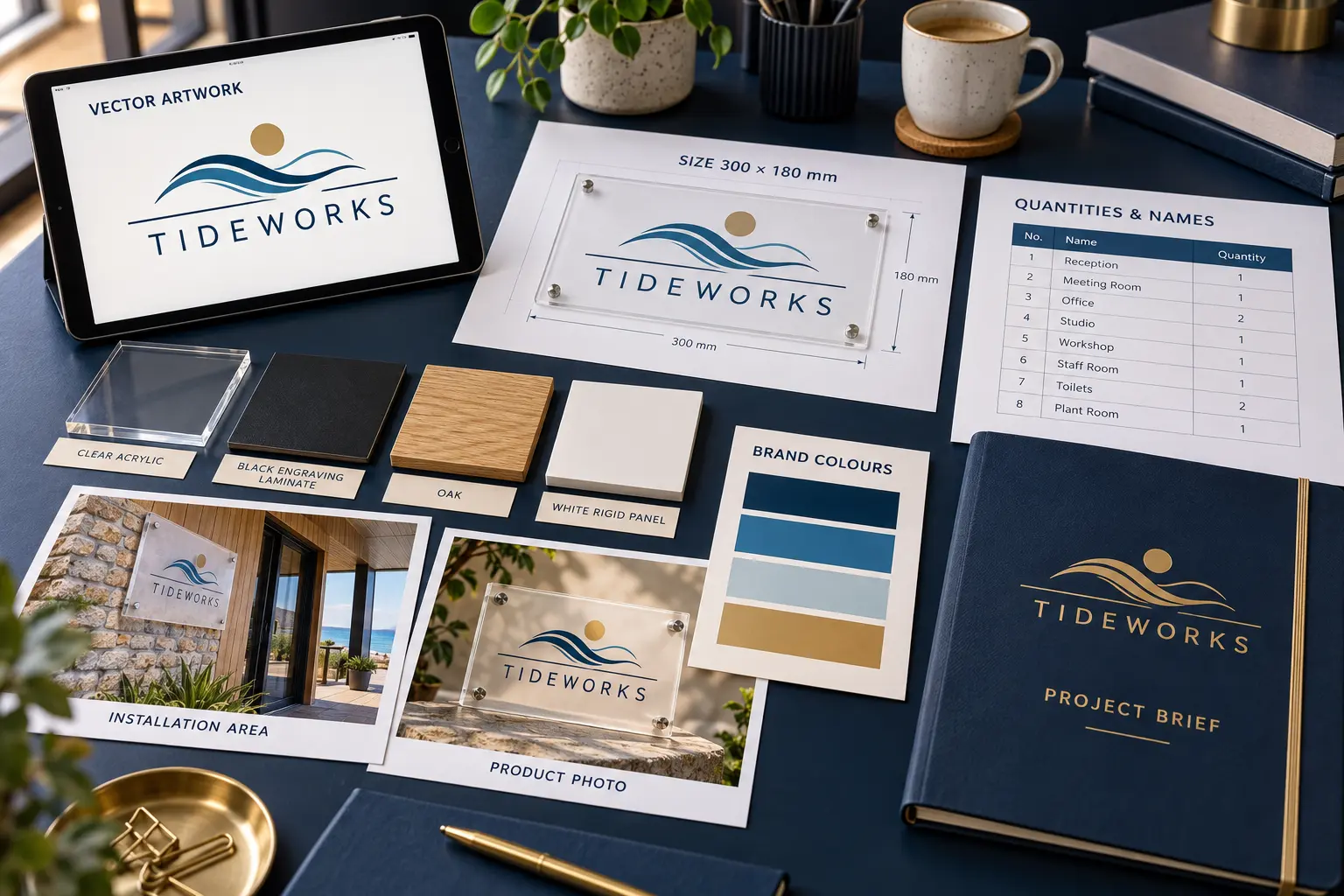
Three useful starting points
Tell us whether the project is an early idea, a replacement for an existing item, or a specified batch. That context helps us ask the right questions without expecting every detail on day one.
Project checklist
Describe the finished item and what it must do.
Overall dimensions are useful even when the final material is undecided.
Separate the total quantity from information that changes between pieces.
Share required specifications or describe the visual result you want.
Artwork files
Original vector artwork is normally the cleanest starting point for logos, cut paths and sharp lettering. Photographs and image-led artwork need sufficient resolution at the intended finished size.
AI, EPS, SVG or a correctly exported vector PDF. Include outlined text or the required font information where possible.
High-resolution PNG, JPG or PDF files can suit photographs and full-colour artwork. Send the original rather than a screenshot where possible.
Send a sketch, photograph and exact wording. We can first establish whether the project is suitable and what artwork preparation is required.
Include colour references, logo spacing rules and any brand guide that must be followed. Do not rely only on colours sampled from a screen.
Schedules & variable data
For QR-linked products
Provide the complete web address each code should open. Test that the destination works, is suitable for customers and will remain available after the product is installed. State whether every item uses the same address or each item needs a different destination.
Useful photographs
A clear photograph often answers questions that dimensions alone cannot. Avoid confidential information that is not needed for the enquiry.
What happens next
Suitability, price and timing depend on the final material, artwork and quantity. Nothing is presented as production-approved until the key details have been checked.
Ready to begin?
The online project brief accepts artwork, a schedule or drawing, and a site or reference photograph. The combined upload limit is 10 MB; list larger or specialist files for separate transfer.
Open the project brief